The joke goes something like, “Don’t ‘assume’ or you’ll make an ‘ass’ out of ‘u’ and ‘me’;” a cautionary chuckle. But let’s face it, people make assumptions all the time. Someone thinks because they know how to do a thing, others already know how to do it as well — and before you know it, misunderstandings abound. A button came off my former client’s shirt in elementary school. His parents handed him a needle and thread, then laughed when he botched the job. But they’d never taught him to sew. Fifty years later, he still burns with anger and shame. At least in my college class the shame spread out amongst us all.
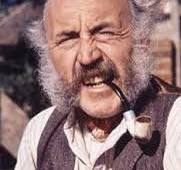
Our professor — perpetually red-faced in a sun’s-over-the-yardarm sort of way, and sporting a wraparound mustache/sideburn monstrosity I’d only ever seen worn by Grandpa Potts in the movie, Chitty, Chitty, Bang, Bang — pointed out, two weeks into discussing Joyce Cary’s The Horse’s Mouth, that a blurb on the book hailed the novel as quintessentially picaresque. “What does picaresque mean?” our professor demanded.
I’d noticed the word but hadn’t followed up. Now, I scrambled around in my brain. There, I found a similar word, “picturesque,” but though I was an unrepentant hand-raiser, I hesitated, certain these were not the same. (Forty-plus years later when I accidentally leave the “a” out of picaresque, my spell check suggests I might mean picturesque.) Then some poor fool fell on his sword by raising his hand and defining picturesque.
The professor scoffed. “No one?” We looked at each other so we wouldn’t have to look at him. He muttered under his breath, something about us calling ourselves students but where was our curiosity? He scanned the room, his small eyes beady with contempt. Then he said, “Pop quiz,” bent on punishing us for our ignorance and on seeing if we’d been shirking our duty on the book’s insides as well. We wrote our names at the top of a piece of paper and awaited his questions. I only missed the first one, which was, of course, “What does it mean if a novel is referred to as ‘picaresque’?”

A couple years ago I found myself at the Tamástslikt Cultural Institute on the Umatilla Indian Reservation near Pendleton, Oregon. We were led through the exhibits by its director, Bobbie Conner. Somewhere along the way — maybe in response to a question, I don’t remember — Conner said, “We raise our children using shame.” Maybe she said “discipline” rather than “raise,” but I quibble. I could see it easily, how well-applied shame could shape the behavior of children from whom certain actions were needed in order to avoid calamity. I felt both admiring that Conner laid this technique out so plainly and also sorry for the centuries of Native kids controlled that way.
But really, the non-Native, mostly White people I was raised among also used shame to get desired behavior or discourage that which was undesired. The only difference between me and Native children was that no one in my world would have so baldly proclaimed the role of shame as a tool in childrearing. Shame is physical, a wrenching, sinking feeling in my throat, chest, and belly that I remember well, so unbearable I would have twisted out of my own body if it were possible. The desire to escape it, that’s what I remember about shame—and also the futility of ever getting away.
Maybe that’s why, during the years when I came into my profession, shame was considered bad. Counselor and addictions expert, John Bradshaw, was making waves with his book, Healing the Shame That Binds You. Shame had gotten out of control. Families had gotten careless with it, resulting in humans who didn’t just think their behaviors were shameful but their very existence, too. Then with time, a few folks in my field reminded us that actually, when we do something shameful, it could be healthy to give it its right name. That kind of shame might remind us to behave more kindly next time.
The kind of shame we students felt with our professor, though—that was unhealthy shame. Despite what he implied, we were all good students but we felt like failures. In actuality, fourteen-plus years of school taught us, among other things, to study whatever would help us to pass the test or write the paper. School didn’t reward us for being curious beyond those skills — it didn’t hand out A’s for saying to ourselves, “Hmm, picaresque. I’ve never seen that word before; I think I’ll look it up.” I was on a first name basis with my dictionary, but that was for vocabulary words — words I understood would be on the test. If anything, we’d done too good a job learning what was expected. Now suddenly this guy assumed we should know something we hadn’t been taught: to look on the back cover and wonder about the meaning of unfamiliar words.
Picaresque, in fact, according to the Oxford Dictionaries, refers to fiction that deals with the adventures of a “rough and dishonest but appealing hero.” Once I learned this definition, I could agree that Cary’s novel was indeed picaresque — except for the appealing part. I found his main character the opposite of appealing. I felt about him the way our teacher felt about us on that fateful pop-quiz day: disgusted by the presenting behavior. The guy in the book spent his energies manipulating his girlfriend, and trying to bed women and get others to pay for his food and drink. Perhaps what was meant to be appealing about him was his quest to cadge enough money to buy a particular shade of yellow paint — I think it was yellow anyway. You see, our protagonist, besides being a mooch and a philanderer, was an artist, and somehow if he added this perfect yellow to his almost-finished painting, he would make his fortune.
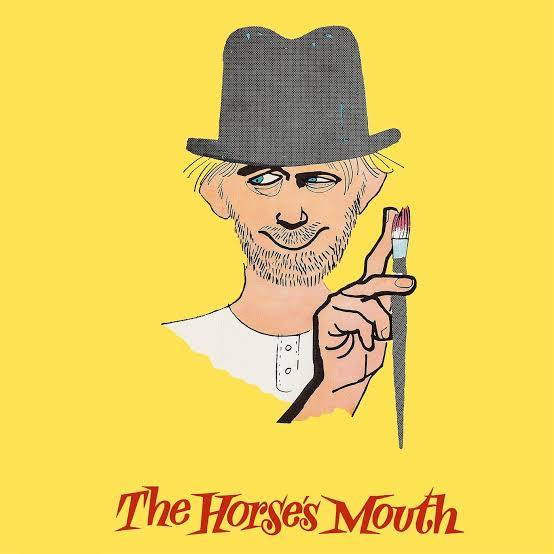
The reader was meant to be amused by his various misadventures and the clever way he bedded the women he wanted and escaped having to pay his rent. Perhaps Cary meant for us to admire the artistic eye and passion that obsessively drove him toward creation. But I guess I’m the original person who has trouble separating the artist from his art. My enjoyment of the perfect placement of the perfect yellow was diminished, knowing the painter left behind misused women and friends who were poorer than before he appeared.
In the end, I believe things went horribly wrong for the hero. Possibly the yellow was found and applied and then the painting destroyed by a cuckolded husband who finally tracked him down. I could be wrong about the particulars, though I trust my distinct feeling of a cringing unraveling at the end.
Let’s stay with that phrase I just used: “I could be wrong.” Could such a phrase ever occur to my professor? The answer is too obvious. To say it to himself, he would first have to understand that his students failing to seek the definition of picaresque could be explained in various ways. Maybe we were incurious gobs, but by assuming he was right about that, he missed other possible explanations. Perhaps other students, like me, worked multiple jobs and carefully used our time for the studying most likely to pay off. Or perhaps we had the time but simply hadn’t considered the back cover because we thought — as with all our previous classes — that the important stuff was contained between the covers.
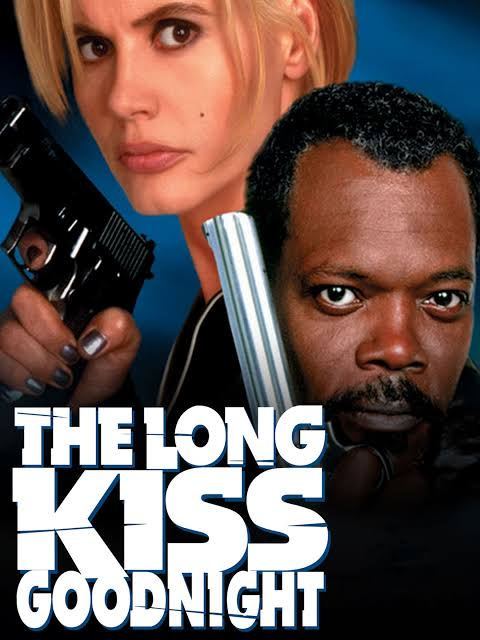
“I could be wrong” is a kind of antidote to assumptions — which, as you can see, I’m cleverly circling back to. My client’s parents could have used a dose of “I could be wrong”, as could our professor. The students in his lit class would have been saved from shame and might even have considered taking another class with him had he understood the power of that phrase. And if that sort of humility would have been too distasteful to Professor, I could have simply shared my favorite Samuel L. Jackson quote from the movie, The Long Kiss Goodnight, in which he cautions, “That’s why they say not to make an assumption, because you’re liable to make an ass out of you and -umption.”
[Film poster for The Horse’s Mouth by Philip Williams.]