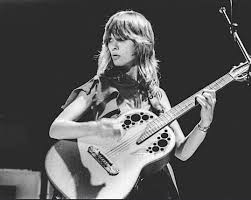
When I was 16, we moved from New York to a very small town. Among the numerous ways this town was a bit behind-the-times—clothing styles that NY, would have been considered out-of-date, only one movie theater, no record store, etc.—it was also challenging to get the haircut you wanted. It seemed as if everyone had gone to beauty school during tutorials on how to give a pixie cut or Farrah Fawcett layers, but had then stopped. If you wanted something else, you were out of luck.
But I didn’t want a pixie cut or Farrah Fawcett layers. I wanted to look like Nancy Wilson from the rock band, Heart. I didn’t actually own an album of theirs so I had to borrow it from a friend. I made an appointment at Cut Loose Hair Salon and brought in the album cover. Pointing at Nancy I said, “This is what I want.” The stylist nodded—they always nodded, like they knew just what you wanted and were prepared to give it to you, and then you ended up with a pixie cut—and wrapped the salon cape around me.
It was impossible to tell during the cut whether I was getting what I’d asked for. If I got a pixie, it’d be months before I could grow it out long enough again. But then finally the stylist twirled the chair toward the mirror. I gasped. Nancy Wilson, eat your heart out.
[I’m currently in a short-term writing class where we often take ten minutes to write from a prompt. Yesterday’s invited us to write about a time when we got just what we wanted.]
Recently, I decided to aim higher with my submissions and send them to better-known publications that paid more. I chose my strongest pieces and submitted them to several journals – ones that regularly appear on lists of top literary magazines. When I finished, I sat back, elated to have demonstrated such confidence. I’d decided my writing had gotten to the point where it was worth a little bit more money and a little bit more prestige. Glowing with positive self-regard, I fantasized about opening my email one day and finding an acceptance: “SmokeLong/Split Lip/The Kenyon Review would be delighted to publish your work!” A thrill of excitement flushed through my body. It could happen; maybe it would happen. Then without warning, my mind turned on a dime and reminded me of the far greater likelihood of opening that email and finding a rejection.
The American military’s basic training is known for its propensity to grind a person down; rejections are the boot camp of writing.
I don’t exaggerate when I say there are days when rejections have as much impact on a writer as if a drill sergeant is yelling inches from their face that they’ll never amount to anything and should quit. I’ll go one step further and suggest that dealing with rejections is even slightly worse than basic training in one regard. True, boot camp employs a systematic rigor meant to take a person down to the studs, a military program that can include name-calling, exertion, exhaustion, and being hounded to push beyond what a person thought they were capable of. But boot camp also offers something writing doesn’t: clear, attainable goals.
For most military candidates, boot camp leads inevitably to achieving what they’ve set out to do. Not so writing.
A writer can strive and strive without truly understanding why this piece was accepted and not that one. Basic training isn’t that ambiguous. You either run the ten miles under the allotted time or you don’t. If you do, you’re one step closer to graduating from civilian to soldier. Writing, on the other hand, has its own rigor and discipline without the clear ending point. We’re all aiming to publish and so we strengthen our writing muscles by taking classes, writing, writing, writing, reading, improving our skills – all of which we can do and still never be published in The Paris Review.
Please don’t hear that last sentence as a drill sergeant’s pronouncement on anyone’s writing aspirations. The situation for writers is one of toil and delight and work and failure and elation and more toil and gloom and exhilaration – without any guarantee that these will add up to being published or paid. Once we understand this, we can shift how we think about it.
Friends and family consider me a successful writer because they only hear from me when work has been accepted. My Submittable page tells a more sobering story. In the last two years, my acceptance rate hovers around 2%. I have yet to make two hundred dollars – total. I’m getting a lot of practice being rejected. In fact, all this experience contributed to me thinking I had something marginally useful to share on the topic. If external confirmation is only going to show up 2% of the time, I, and other writers, need to reclaim the definition of what constitutes success.
When I set out on this writing-in-order-to-publish journey almost three years ago, it took time to recover from each rejection. The carefully-worded rebuffs knocked me down pretty hard, convincing me that, rather than write that morning as planned, perhaps I should wander aimlessly around my yard instead.
Clearly, I had to relate differently to these rejections or I wouldn’t be able to persist. Rather than orienting toward the much-preferable giddy fizz of someone wanting to publish my writing, I gradually oriented toward the rejections themselves as evidence: evidence that affirmed I was actively involved in pursuing my aspirations. As long as this confirmation existed, I was succeeding.
I’ve already received the first rejection from that flurry of aiming-higher submissions I mentioned at the beginning of this essay. I was disappointed – of course I was – and then I also remembered, here was proof that I was in my own corner, taking the only steps that might lead to my goal of publishing. When I look at the 143 rejections on my Submittable page – now 144 – I’m seeing evidence of my effort and my belief in myself.
Short story writer Raymond Carver famously told students, “No one asked you to be a writer.” I think what he meant was, rather than homing in exclusively on external validation – from people who hadn’t asked for your essay or short story in the first place –, writers needed to cultivate self-approval. This inner landscape is the only thing we have any control over. Sometimes (most of the time?) we might be the only one who knows that we finally scaled the wall or climbed the rope or beat our best running time, so we better find a way for that to count for more than whether or not the drill sergeant – or in our case, the editor – appreciates that. It needs to count that the writing life and steady growth are what we want for ourselves and that we’re doing what we can to get there – one rejection at a time.
I walk to work when I can. Thursday, I headed out around 9:30, earbuds in, listening to the latest Ezra Klein interview. As I got to the busy street (which I cross without a light), a man came up beside me. He was taller than me by several inches and thin with white hair and lively eyes. He said, “What do you think? Shall we do it?” I took my earbuds out. He looked down the street toward oncoming traffic, and when he turned his animated face back toward me, I saw he was almost entirely toothless. Again, he leaned toward me as if we were scheming together. “Let’s take our lives into our hands.” We crossed the street together, him gleefully, as if we’d cheated death once again. I asked where he was headed. He gestured away from my direction. “Gonna get a cup of coffee down the street.” We waved to each other as we parted ways.
***
Last Sunday, I was laid over in the Salt Lake City airport. Two young women in their early 20s sat opposite me and threw the conversational ball back and forth. I didn’t pay much attention until one of the young women perked up looking down the main walkway and said to the other, “Is that her?” The other young woman half-stood and craned her neck, then said, “It is!” She moved toward the walkway.
Their tone was so excited and reverential I half expected to see Beyoncé passing our gate. Instead, the person who came into view was a petite and very young-looking woman pulling a suitcase on wheels and dressed in the stiff and official-looking clothes of a pilot. The second young woman ran up to her and they spoke excitedly. The first hung back, though the pilot waved to her. Were the pilot and second woman friends? Sisters? Cousins? I don’t know, of course, but it did appear the two young women had been keeping watch for this pilot, excited to see someone who looked like them, suited up to go fly an airplane filled with passengers.
Eventually a selfie was taken then the pilot walked on. The second woman returned to her friend, both of them filled with the giddy energy of possibility.
[This past October, I wrote from a prompt every day. I thought I’d share a few since I haven’t been here in a while.]
A client of mine recently moved to Spain and, as one might expect, the transition has been challenging. A different culture, a different town, a different language. The only stable, familiar entity is his longtime partner. Otherwise, all is new. Yesterday, he shared how demoralizing it was that sometimes, he walks into his usual café to write and think, and becomes consumed by the belief that the other regulars (who he knows by sight, but they do not speak) don’t like him. This way of thinking is, of course, familiar to him. It goes all the way back to childhood and a raging father and overwhelmed mother in whose presence he often felt wrong or bad or unwanted. He’s demoralized because, surely, now that he knows this thought isn’t true – but rather is an erroneous belief he formed in childhood – surely he should be able to simply not believe it anymore.
I empathize. Many beliefs about myself have – thankfully – loosened their grip with time and effort. But, under the right – or wrong? – conditions they’ll flare up again. They’re tenacious, these beliefs. Sometimes they’re dormant for a long time and we think we’ve finally escaped their painful influence, only to have them rear their ugly little heads when we’re at our most vulnerable. Like moving thousands of miles away to an unfamiliar country where you only know one person. The experiences that caused the belief in the first place come with us because they happened to us. Kind of the way a scar does.
I warned my client that what was coming next was cheesy, but to bear with me. Then I shared my scar analogy: the event that caused the scar was in the past, but the scar carries on. Mostly we can forget about it and go about our lives. But now and then, things happen that remind us that the skin of that scar doesn’t – can’t – behave like unscarred skin. That’s just how this skin is now. We can want it to behave like unscarred skin, but it won’t. It will behave the way it’s conditioned to; no amount of wishing it were otherwise will change that.
My client didn’t want to hear this from me. He wanted a miraculous cure that would free him once and for all from this painful belief so he could henceforth move more sunnily through life. What he got instead was, “That ain’t gonna happen; beliefs don’t work that way.” Whether or not he wanted to hear this, when he did hear it, something in him settled – because of course this was really about shame: the shame he felt that an emotional scar was still there behaving like – an emotional scar. He’d never ask a physical scar to be anything other than what it was; he’d never think to feel ashamed that his scarred skin didn’t act like unscarred skin. What if he brought this same “logic” to his emotional scars?
For a moment, he got a glimpse of what it might be like to walk into the cafe, and feel his belief rear up, and instead of berating himself about it, hold it with tenderness. Maybe he could even say to himself, “Aww, honey, this is hard what you’re doing, and hard things bring up this worry about not being liked.” He could offer to himself the tenderness he needed as a kid instead of the shaming he got instead. Just for a moment, he’d know he was okay, he was loved. String about a million of these moments together and this belief might not be so tenacious – until the next time.
Watching the “Moby Dick” episode of The Adventures of Mr. Magoo on Sunday morning TV helped me to understand that I was Ishmael to her Ahab. I was the observer who sort of understood the other’s obsession, and sort of didn’t.
I, too, was subject to the relatively new body chemistry that intensified my interest in boys. But my best friend Libby’s interest was next level.
My crushes followed a predictable course: I got fixated, I tested the water cautiously, I backed off. My fixations were somewhat calculated, and I’d already decided an 8th grader was much too grown up to be interested in a mere 7th-grader like me. So I crushed on guys my age who I might have some hope of exchanging a few words with.
Libby did not limit herself in this way. She made no distinction between accessible and inaccessible crushes. We regularly encountered 8th-grade boys in band class and she longed after them. Lee who played French horn, Ricky on trumpet, and Matthew, a flute player like us. Her crushes on them were simultaneous and absolute.
“Oh my gosh, I love ‘Rikki Don’t Lose That Number.’ You know that song? Every time it comes on the radio, I think of Ricky and his mouth on that trumpet. Did you know there’s a drink called a lime rickey? Do you suppose Matthew can play the flute part to the Mission: Impossible theme?”
Anything served as an opportunity for Libby to be reminded of her love interest, and she was not one to passively pine. She wanted to take action: where was his locker? How could we find it? Had he noticed her as we walked by on the way to the cafeteria for lunch after band last Wednesday? Should she write him an anonymous note and slip it into his locker if we ever found it? There were posters in the hall that she had done the lettering for; should she therefore disguise her handwriting in the anonymous note?
To every question I answered, “Yes.” Yes, he might have noticed you; yes, let’s casually wander the halls to see if we can spot him at his locker; absolutely, yes, you should write him an anonymous note.
The anonymous note was a brilliant idea. If it didn’t appear to be welcome, it had the benefit of deniability: Who me? No, I didn’t send you a note. But it also cued the boy that he had an admirer; maybe he’d look around more purposefully to see who it might be and his eye would fall on Libby. I couldn’t imagine doing these things myself, but I was fascinated, being so near to this active reaching for a desired someone.
Actually, I could imagine doing these things myself. I’d gone for it, once, the month before, and I didn’t enjoy the experience. Danny Schwartz was in my social studies class. He was stocky with a gravelly voice I loved, wavy brown hair, and a dusting of freckles. He was also funny and his desk was one row over from mine.
One day we talked before class about nicknames and I revealed I’d never had one. He cocked his head to one side and said, “I’m going to call you Ketchup.” I brought this exchange home like a mystery offering and turned it over again and again. He’d been flirting with me, right? That’s what that had been, wasn’t it? Libby and Danny had locked horns in sixth grade and he’d been her sworn enemy since, so I kept my crush to myself. My heart leapt with every, “Hey, Ketchup, how’s it going?” when he saw me in class.
Passing each other in the hallway was another story. I’d see him from afar and perk up in anticipation. Maybe he’d notice me this time. Maybe he’d call me Ketchup and everyone would hear he had a special nickname for me. But his notice didn’t extend to the spaces outside of class. Pretty soon, I had to admit it wasn’t that reliable in the classroom either. My crush was getting nowhere. I didn’t enjoy my wants being so exposed, particularly when they were unrequited.
Meanwhile, Libby’s crushes reached a fever pitch. She had to get Matthew or Ricky or Lee to notice her. Lunch was directly after band practice, and the band teacher, in order to discourage snacking, asked that those who brought their lunches from home leave their brown paper sacks and lunch boxes on the floor just inside the door. Libby leaned toward me and whispered with reverence, “I saw Matthew set that sack down. That’s his lunch.” I wasn’t sure exactly what this signified but I nodded indulgently.
After band, Libby rushed over to the lunches. “Hey, Matthew!” she called out as she drew her foot back.
She told me later she only meant to pretend to kick his lunch, to get his attention and surprise him. Instead, her foot connected and sent Mathhew’s lunch slamming into the wall. Libby cringed away from what she’d wrought, hand over her mouth.
Matthew strode past her and picked up his lunch. He opened the bag. “You kicked my banana,” he said, shaking the leaking, mashed piece of fruit in her direction, his face twisted in disgust.
I never wanted to be on the receiving end of so much negative attention. To be so obsessed with landing the whale that you’d risk humiliation and disappointment was more “out there” than I ever wanted to be. I needed to look no further than Moby Dick itself to understand which role was more survivable.
November 1 is something of a personal anniversary to me. It’s the day in 1976 when I walked out of the house we’d recently moved into in Albany, Oregon, to meet the schoolbus. We lived on the outskirts of town. Across the street from us was a farm field that now lay fallow. A low fog hung everywhere and the field was covered in frost. A spider had built a web between the post and crosspiece of our mailbox and it was encrusted with frost. The beauty of it heartened me. I thought, “It’s going to be okay.” Surely it would be okay, if beauty like this could be had for free on an otherwise ordinary morning.
I’m sure you’re picking up on the fact that, at the time, I understood the existence of beauty to be a cause and effect thing: the fact of beauty’s existence meant good things would happen. Forty-seven years later, I have a different understanding. Beauty simply is, and at that long-ago moment, I was helped by the comfort beauty gave me. But it didn’t change the reality of life, the fact that life comes together and falls apart, comes together and falls apart, on and on.
I love that I was a fifteen-year-old whose gaze could be lifted out of her own suffering by beauty.
For reasons I don’t fully understand, something unusual happened next, in this moment, as I wrote this. I had the idea to imagine that fifteen-year-old me in Israel, then in Gaza. Let’s suppose for a moment that she can find beauty, even in the midst of terror and destruction. Perhaps some quality of afternoon sunlight angles through the window and she is struck by it, how it warms the room with its buttery glow. For just that second, she is in a pure moment with beauty.
It’s pretty clear, though, that that moment is not a promise. Her ability to appreciate beauty changes nothing of the circumstances of her world. Things will not be okay just because she can perceive the beauty that’s there. Beauty helps, helps us, helps me, to carry on. But it’s only humans who can change the suffering we’ve created. The only “promise” that exists is in the hands of those in power, should they choose to take it.
I hope they choose their children. For me, forty-seven years ago, things did get better – and then they didn’t, and then they did again, and so on. I’ve had the privilege of a fairly ordinary life. I want that for the children of Gaza and Israel, too – if it’s not already too late. I want them to be able to walk out on a school day and just have the ordinary fears that go along with being a human kid in a school; I want them to see whatever their equivalent of my spiderweb would be to them – an olive tree or a flamingo flower. I want something lovely to have the power to make them feel better and carry them through their ordinary day.
[I wrote this draft almost exactly 10 years ago. It amuses me so I decided to finally share it.]
In front of my new workplace, there is a food cart. It’s called the Cultured Caveman and caters to people following the latest foodie trend called the paleo diet. The paleo diet is a meat heavy way to eat, but this being Portland, the cart has veggie fare, too, and I visit it for a snack a couple times a week. Yesterday, the guy at the cart and I were talking about how great the weather has been and how it’s even supposed to last through the weekend.
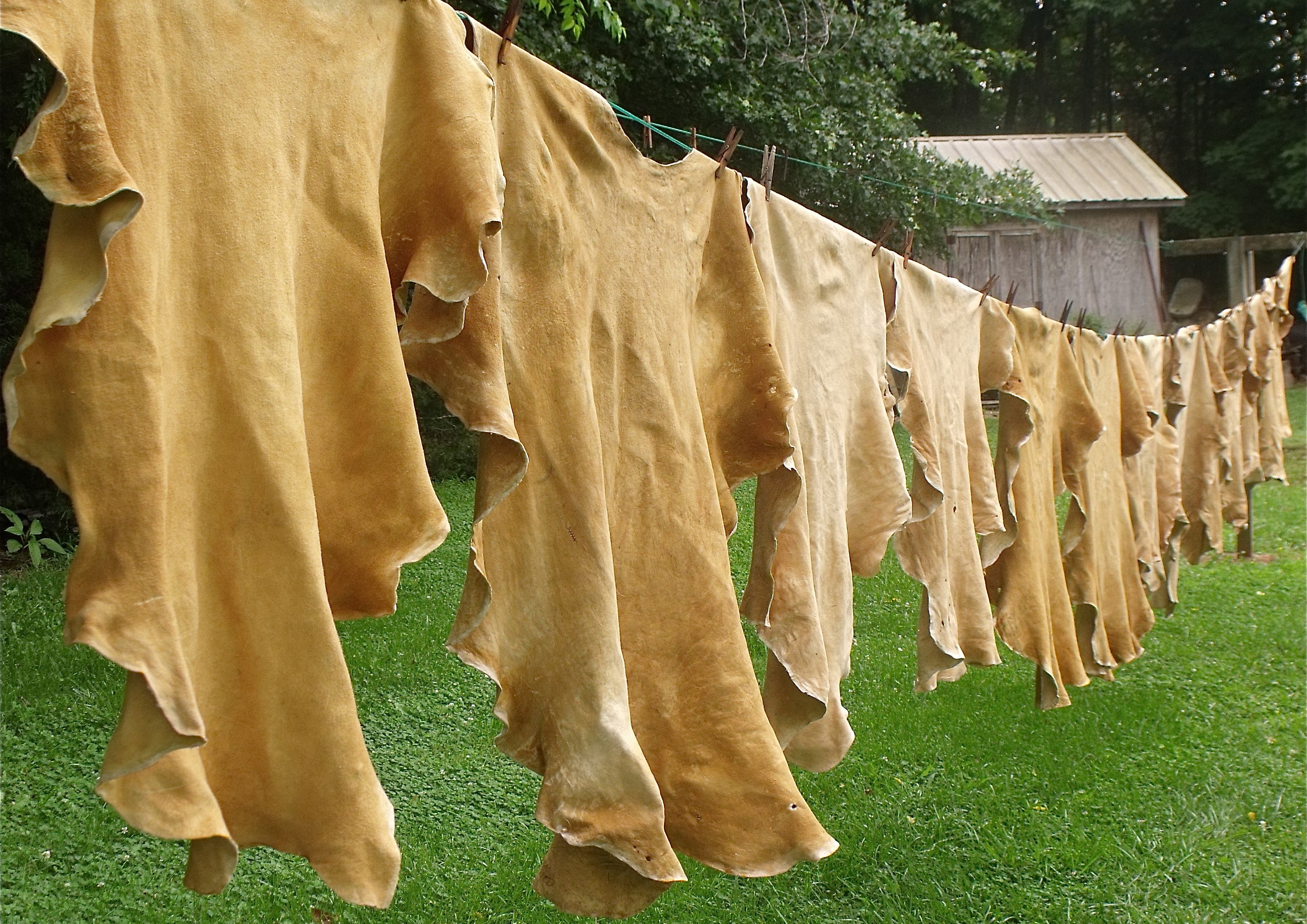
The Caveman guy said, “Yeah, I’m super-glad. A bunch of us are tanning hides this weekend and it’s a lot nicer to do it in good weather.” Being my brother’s sister, I asked some moderately intelligent questions about his plans and learned they’d procured some roadkill deer and a nutria (a nutria looks like an enormous rat but is web-footed and hangs out in the river). His group would tan the hides this weekend with the intention of eventually using them to make outfits. “I have a small nonprofit in Portland that teaches people wilderness skills and we thought we should look the part more.”
For some reason, it makes me smile to live in a city where some people are engaged in making themselves deerskin clothing.
A younger friend of mine has been learning how to surf. She returned from the surfing camp she attended in Costa Rica elated – and chastened. On one surfing run, she caught the wave perfectly, and remained steady on the board as the wave swept her across the ocean’s surface. “The speed was exhilarating; I was going so fast!” She was suffused with a sense of accomplishment and joy.
Each evening, the surfers viewed footage of themselves, to check out how they might want to adjust their form and timing. My friend was excited that she’d get to see herself, skimming across the water like quicksilver. “But it wasn’t like that at all,” she said. “What I saw was the surfing equivalent of me taking a stroll in the park.”
I was struck – and so I said – wasn’t it interesting how, after seeing the video, what she saw became truer to her than what she felt?
I thought of her the other day as I got on my bike. I’ve been biking to work most days this summer, trying to get back in the habit. My body is loving it. Sometimes, I push it a little, just to feel my 61-year-old muscles responding. And they do respond. At days end, I feel the good kind of tired.
My body’s returning vitality isn’t obvious from the outside. My outward appearance is still that of a round-hipped, thick-legged 61-year-old woman. When I consider this – the likelihood that my appearance doesn’t square with how I feel – some of the vitality from my bike ride leaches away, and the thought comes, “Don’t get to feeling so good; you wouldn’t feel that good if you knew how you looked to other people.”
What happens when we remember our eyes can deceive us? Or maybe more accurately that our eyes are only one of our senses, and the information they bring is not any more valid than that from the other senses. Inside my friend’s sedate-looking surf run was the rush of pure focus and life! Inside this plump body, my muscles sometimes still rise to the occasion, pedaling me past urban garden patches of corn and squash, chicken coops painted barn-red, and the color-burst of gladioli. If I thought I had to look like Beth Heiden in order to get on my bike, I would miss out on these things.
Maybe as we age, our eyesight worsens and our conspicuousness in the world fades because it’s meant to. We’re not supposed to care as much about how we might appear, because that is so much less important than what’s happening inside of us. We’re not supposed to be so concerned with what we see; what we experience is where the juice is.
I learned how to drive on a 1973 VW Microbus with a manual transmission. My mother’s patience was a thing of legend so she took on the task of teaching me. For years already, whichever kid sat in the passenger seat was allowed to shift when she put in the clutch, so I had some experience there.
Now, in addition to all the steering and signaling, I had to also get used to putting in the clutch whenever I braked so I wouldn’t kill the engine. For a while I avoided braking as much as possible, rolling through stop signs when no one was around to see. Because once I was stopped and needed to start again, it meant navigating the dance between clutch and gas pedal, letting out the former while pressing on the latter in hopes of having them catch at the right time for a smooth acceleration. A smooth acceleration was also a thing of legend. It didn’t help that while I was fussing with these two pedals I was unable to depress the brake to keep the car from rolling. On flat ground this wasn’t much of an issue. On hills it was another story.
For hills, my mother taught me – tried to teach me – how to use the handbrake to buy myself some time while attempting to move the car forward. The idea was to engage the handbrake while the clutch was in and, as you felt the accelerator more and more likely to take over, you eased off the handbrake. In this way, the brake kept the car secure during that vulnerable transition. I never got the hang of it and instead got good at being lightning fast at letting the clutch out and pushing down on the gas pedal.
***
I dated Mark casually off and on in high school. College and grad school took him out of state, but whenever he returned on a break, I’d plan to see him. Then, when I was 27, overnight he became interesting to me. We began writing letters to each other, and suddenly I saw behind the veil. Before our correspondence, I would have described him as intelligent, and self-contained to the point of aloofness. Now I was coming to know him as someone with not just an intelligent mind but a lively one too. Once, he wrote that while he dozed on the couch, he thought he heard his roommate shuffling cards, only to find out later the guy was loudly munching Captain Crunch cereal.
I also came to know him as someone with feelings, and some of those feelings were for me. He said they were strong ones. So strong that, were he not bound to graduate school in Austin, he’d immediately return to Oregon to be with me.
I was 27 and had nothing going on more compelling than declarations of love.
“I want you to move here, but I feel I should warn you. If you came,” he wrote, “you’d be on your own a lot. I don’t really have friends. And I work every day.”
It was difficult to imagine myself into the world he described. How much could someone work, really? And surely no one has no friends. I moved to Austin.
It is possible for a person to work most waking hours. This single-mindedness can make friends feel unnecessary. I convinced Mark to return home each evening for dinner, but then he headed back to the University and his work.
I got a retail job, joined a women’s support group, and hunkered down in the Texas heat.
Months passed. I was unhappy. I loved him. I didn’t understand why, if he loved me, he couldn’t make more time for me.
Once, we drove from Austin to Portland to visit family. I had trouble getting enough sleep on the 45-hour drive. I would drive, and then Mark would drive. Along one stretch in Wyoming, I convinced myself while I drove that I could rest my eyes now and then.
During one tearful fight – Why wouldn’t he spend more time with me? Did he understand that my friends half-seriously thought I was making him up because they hadn’t met him yet? Why wouldn’t he come to therapy with me? – he said to me through clenched teeth, “I told you how it was; I was honest with you.”
For the three years we were together, often I’d dream I was in the microbus, stopped on a steep hill, a line of cars behind me. To the left, the land beside the road rose steeply upward. On the right, no guardrail, just a gentle grassy shoulder and a precipitous drop beyond that. I pulled on the handbrake but it was old or damaged somehow and kept slipping. I yanked on it harder, trying to release the clutch at just the right moment, to propel the car forward, but I couldn’t get it right. With each attempt, I moved, not forward, but backward. It was essential that I not hit the cars behind me. I turned the wheel and continued a slow slide toward the drop off.
I was in a bar once in Santa Rosa, California, where I stayed at the rustic spa of my then-boyfriend’s aunt and uncle. It was the sort of place Annie Leibovitz went to to get away from it all. I know this because she was there, Annie Leibovitz, getting away from it all at the exact same time we were visiting.
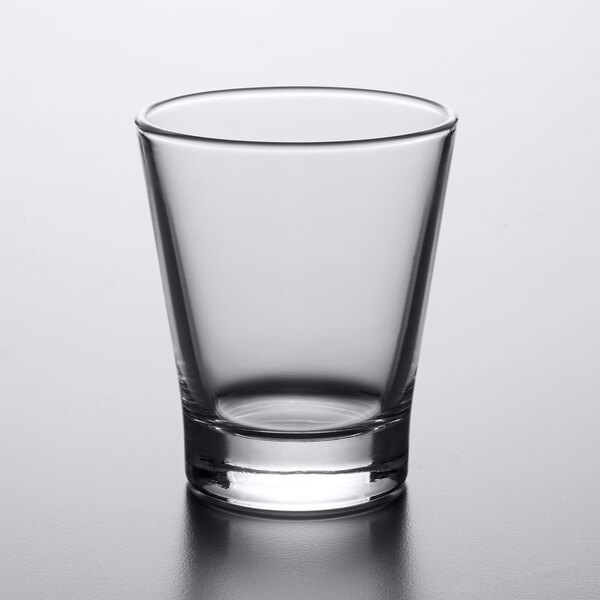
The bar was in town, and we needed a bar because my boyfriend’s aunt needed a shot glass. Forthwith I will refer to his aunt as “Alice” because of her uncanny resemblance to my great-aunt Alice, down to her white-haired Julie Andrews haircut and upbeat, chirping voice. Aunt Alice swam laps every day of her adult life without fail, had never drunk alcohol of any kind, and became a Christian Science practitioner once she retired. Anyhow, there were no shot glasses to be found on the premises of the rustic spa so we piled into Alice’s pickup and drove to town. She needed a shot glass because someone had told her about a bar trick involving two shot glasses and an egg. She was determined to try it out.
Alice brought her own egg to the bar because none of us knew if a bar could be expected to have one; we thought not. We did feel certain a bar was the right place in which to find shot glasses. Alice wouldn’t tell us what the bar trick was until we got there, but it was the sort of trick you’d get people to bet on: “If I do this impossible thing, will you buy my next drink?” That sort of thing.
The bar’s interior was clean and light-colored, save for the bartop long, sleek, and dark. It had only just opened for the day and there were no customers. Some of the table chairs had yet to be turned upright onto the floor.
Two men stood behind the bar. Alice said, “We’re not here to drink. There’s just a bar trick I want to try. Could I have two of the same kind of shot glass?”
The men looked both wry and skeptical. One flipped his bar towel over his shoulder and reached behind him. He set two shot glasses side by side in front of Alice. She climbed onto a barstool, so my then-boyfriend and I did the same. It was not my first time in a bar, but it was my first time sitting up at the bar on a barstool with shot glasses in front of me.
“Then there’s this.” Alice reached into her purse and brought out the egg. She eyed the two-gallon container of pickled eggs halfway down the bar from us. “We didn’t expect you to have any,” she said.
She placed the wider end of the egg in one of the shot glasses, then eyed the barkeep. “Will you give me a dollar if I can move this egg from that shot glass to this one?”
“Uh, no,” the guy said.
“Oh, I forgot!” Alice said. She began again. “Will you give me a dollar if I can move this egg from that shot glass to this one without touching it?”
The barkeep looked only moderately more interested. I, on the other hand, was rapt. He narrowed his eyes. “You mean without touching it with your hands. You’ll probably roll it across to the other glass with your nose or something.”
“No. Without touching it with any part of my body.”
He paused. “Without any part?”
She nodded.
The barkeep punched a key on the till and the drawer shot open with a ding! He pulled out a one-dollar bill, tented it lengthwise, and held it out to Alice. Then he pulled it back. “And if you don’t do it?”
“Then I owe you a dollar, obviously,” Alice said. She reached out and snatched the bill from his hand and flattened it against the bar. “Okay, here goes. We’ll see if this works.”
Alice leaned above the egg, tightened her lips, and sent a sharp jet of air between the egg and the side of the shot glass. Nothing happened. She looked sideways at me. “Maybe I’m doing it wrong. This is what the book said to do.”
“What book?” my then-boyfriend asked.
“A book on bar tricks.” Alice leaned over again, positioned herself slightly more to the left of the egg, and blew once more.
The egg jittered momentarily like a jumping bean, then leaped up out of the glass and tipped over into the shot glass beside it.
“Ha!” Alice straightened up and beamed at us all.
“I’ve never seen that one,” the barkeep told his workmate.
Alice held the dollar out to him. “How many pickled eggs will this buy?” she asked. “I’ve worked up an appetite.”








 ...Like the Hurricane